Introduction
Will a foot valve fit your existing suction pipeline without creating installation or maintenance problems? For buyers sourcing a PP Foot Valve Flange End, Thread End Supplier in Tamil Nadu, checking connection compatibility, fluid conditions, and pump requirements is essential before placing an order.
1. Why the Suction-Side Connection Deserves Attention
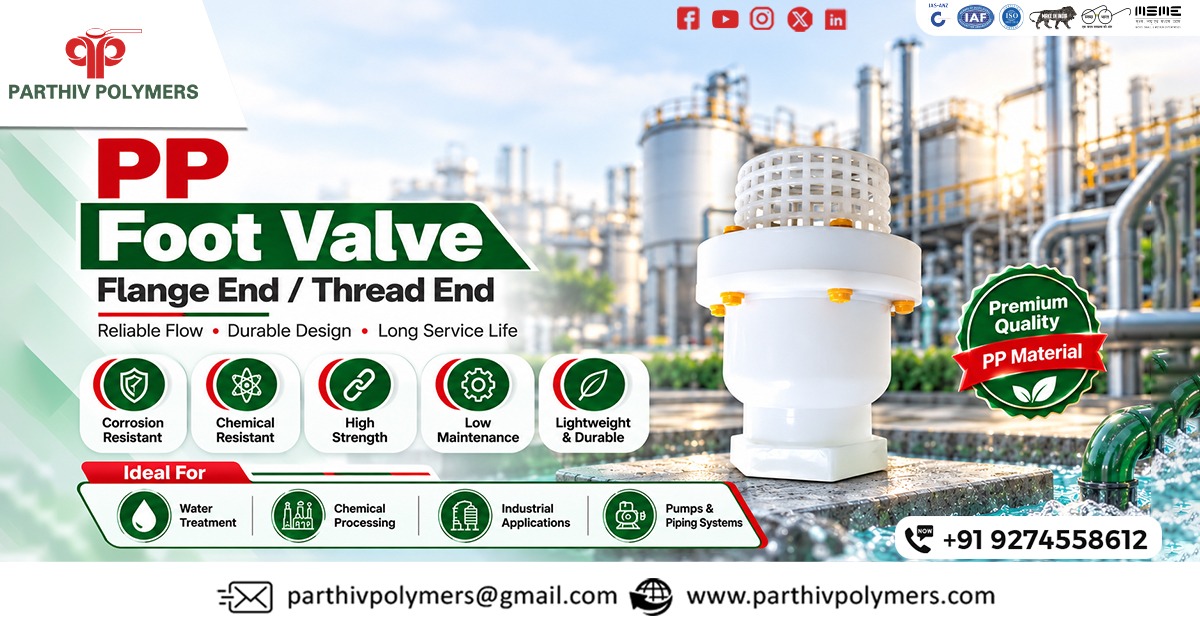
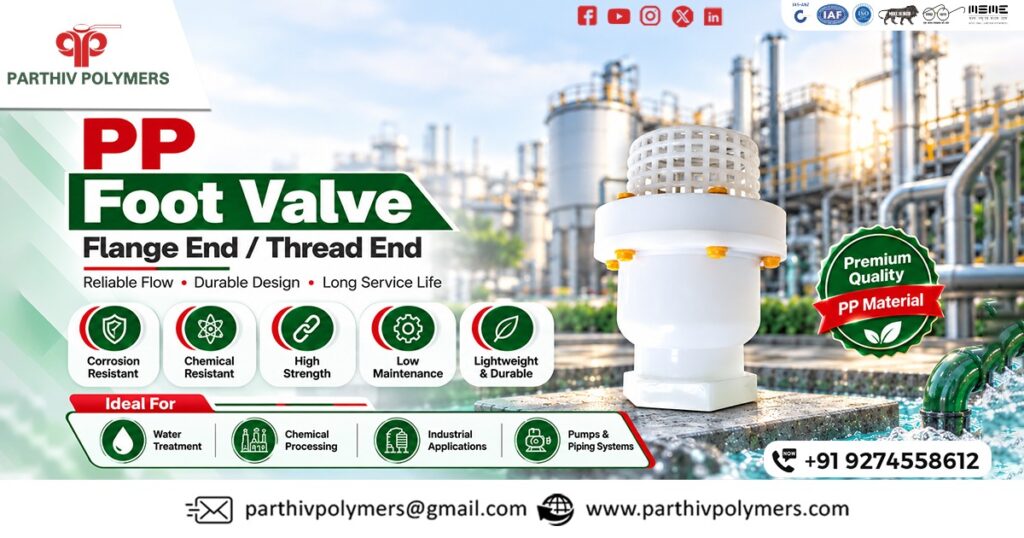
A foot valve is installed at the suction end of a pump, usually near the fluid source. Its primary role is to help retain liquid in the suction line and reduce backflow when the pump stops. A screen at the inlet helps restrict larger debris from entering the pump system.
However, the valve must suit the complete installation. A connection that does not match the pipeline can create unnecessary fitting work, sealing problems, and maintenance difficulties.
For industrial buyers, the important question is not simply which valve is available, but which configuration fits the piping arrangement and operating conditions.
2. Flange End or Thread End: Which Connection Fits Your Pipeline?
This configuration is worth considering when the suction line uses a compatible flanged connection. Buyers should verify the flange standard, nominal size, bolt-hole arrangement, gasket requirements, and available installation clearance before ordering.
A threaded configuration may suit smaller or threaded suction-line arrangements. Confirm the thread type, nominal size, mating fitting, and sealing method rather than relying on the inch-size designation alone.
Neither connection is automatically better for every installation. The correct choice depends on the existing pipework, assembly method, maintenance access, and operating requirements.
3. Check the Fluid Before Choosing the Valve Material
Polypropylene (PP) is used in industrial fluid-handling systems because it offers resistance to many chemicals. However, compatibility depends on the actual chemical, concentration, temperature, exposure time, and operating conditions.
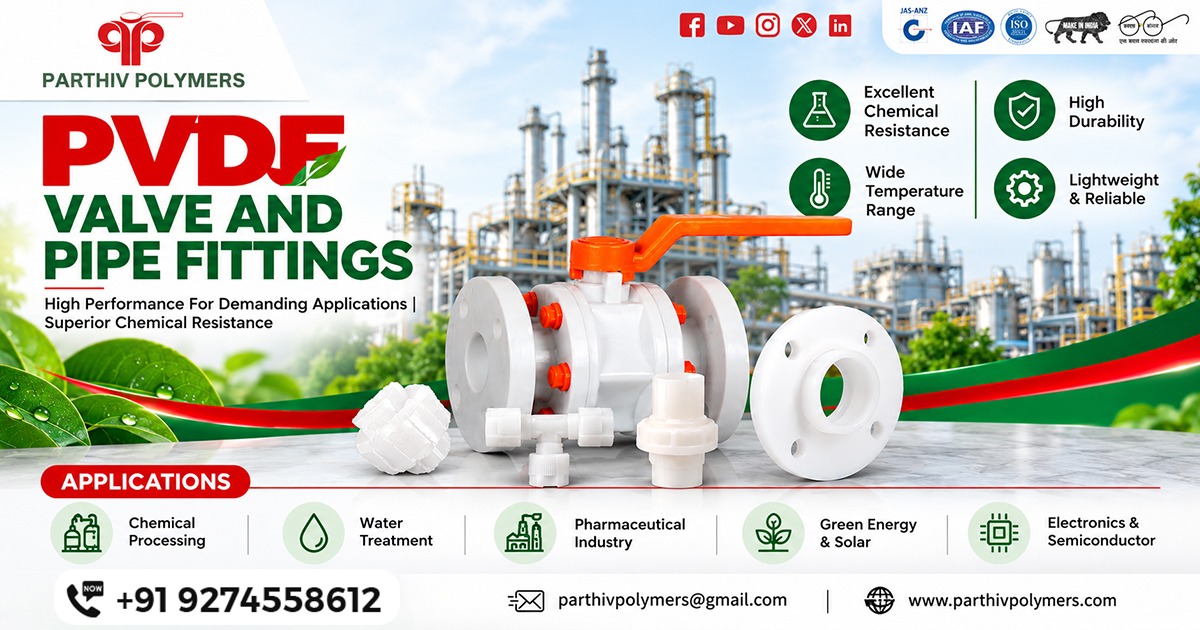
Parthiv Polymers also lists PVDF as a material option for its PP foot valve product range. PVDF and PP should not be treated as interchangeable for every application.
Before selecting a valve, confirm:
– The exact liquid or chemical being handled.
– The normal and maximum operating temperature.
– The expected suction conditions and pressure limits.
– Compatibility of the valve body, ball, seat, and sealing materials with the fluid.
A material suitable for one chemical-handling process may not be suitable for another, even when both systems use similar piping sizes.
4. Understand the Ball Mechanism and Inlet Screen
The listed Parthiv Polymers foot valve uses a ball-type, soft-seated design. In this arrangement, the ball and seat help control reverse flow, while the inlet screen helps prevent larger particles from entering the suction line.
Screen condition is important. If debris accumulates on the screen, suction resistance can increase and reduce the liquid reaching the pump. A damaged seat or trapped particles can also interfere with backflow prevention.
The valve should therefore be selected with the liquid’s cleanliness and the site’s inspection requirements in mind. Where the fluid contains suspended solids, discuss screen suitability and cleaning access before finalising the configuration.
5. Which Dimensions and Operating Limits Should Buyers Verify?
The product page provides size-wise dimensions for flange-end and thread-end configurations. It also lists PP and PVDF material options and a ball-type, soft-seated construction. These details are useful starting points, but the final selection should be based on the exact model and application.
Before approving a quotation, clarify these technical details:
– Nominal size: Match the valve size to the intended pipeline connection and required flow.
– Connection standard: For flange ends, verify the mating flange standard. For thread ends, confirm the thread specification.
– Overall dimensions: Check installation length, external diameter, and available clearance.
– Operating limits: Confirm the manufacturer’s applicable pressure and temperature limits for the selected material and configuration.
– Sealing components: Verify seat and ball material compatibility with the process liquid.
Do not assume that two valves with the same nominal size have identical dimensions or interchangeable connections.
6. A Practical Example: Replacing a Foot Valve in a Chemical Transfer Line
Consider a hypothetical chemical-processing plant in Tamil Nadu that needs to replace a worn foot valve at the end of a pump suction pipe.
The maintenance team initially identifies the valve by its nominal size. During verification, however, it discovers that the replacement must also match the existing connection, chemical compatibility requirements, and available clearance inside the fluid tank.
The team records the existing valve dimensions, checks the connection standard, and confirms the liquid’s chemical compatibility with the proposed body and seat materials before ordering.
This simple verification process can help prevent avoidable installation mismatches and reduce the risk of selecting an unsuitable replacement.
7. What Should Be Included in the Purchase Enquiry?
Before approaching a PP Foot Valve Flange End, Thread End Supplier in Tamil Nadu, prepare the following information:
- Required valve size and preferred flange-end or thread-end connection.
- Existing pipeline details, including flange standard or thread type.
- Liquid name, concentration, operating temperature, and relevant chemical properties.
- Expected operating conditions and the pump’s suction-line requirements.
- Required material, dimensional drawing, applicable pressure limits, and inspection documentation.
Sharing these details helps the supplier assess the requirement more accurately and clarify any technical points before order confirmation.
8. Four Product-Related Service and Support Points
The following are useful areas to clarify with the supplier during procurement.
1. Requirement Assessment: Share the pipeline size, fluid type, and operating conditions for product evaluation.
2. Connection Selection: Confirm whether a flange-end or thread-end configuration matches the installation.
3. Technical Documentation: Request the applicable dimensions, material details, and operating limits for the selected model.
4. Order Coordination: Clarify quantity, quotation, dispatch schedule, and delivery arrangements before confirming the purchase.
9. Sourcing PP Foot Valves for Industrial Projects in Tamil Nadu
Industrial buyers in Tamil Nadu may source foot valves for chemical transfer systems, process plants, water-handling installations, and other compatible fluid applications. When purchasing from a manufacturer located in another state, it is useful to coordinate technical approval, dispatch planning, and delivery timelines before the project requires the component.
Relevant industrial and business locations include Chennai, Coimbatore, Madurai, Tiruchirappalli, Salem, Hosur, Tiruppur, Erode, Vellore, Tirunelveli, Thoothukkudi, Nagercoil, Thanjavur, Dindigul, Cuddalore, Kanchipuram, Ambattur, Sriperumbudur, Ranipet, Sivakasi, Karur, Namakkal, Pudukkottai, Neyveli, and Nagapattinam.
These locations are potential sourcing markets, not a confirmation of service coverage or delivery availability in every area. Buyers should verify current supply arrangements directly.
10. About Parthiv Polymers
Parthiv Polymers manufactures and supplies industrial plastic valves, pipes, and pipe fittings. Its published product range includes PP Foot Valve Flange End and PP Foot Valve Thread End, with PP and PVDF material options listed for these products.
The company’s manufacturing unit is located in Ahmedabad, Gujarat, India. Buyers in Tamil Nadu can review the product details at the official website, parthivpolymers.com, and contact the company to discuss their required size, connection type, material, and application.
The final product choice should be confirmed against the relevant technical details rather than location or nominal size alone.
11. Frequently Asked Questions
Q1. What is the main purpose of a PP foot valve in a pump suction line?
A PP foot valve helps reduce reverse flow when the pump stops and can help retain liquid in the suction line. Its inlet screen also helps restrict larger debris from entering the system.
Q2. Can I replace a threaded foot valve with a flange-end model?
Not without checking the piping arrangement. The replacement may require compatible flanges, adaptors, gaskets, and sufficient installation space. Confirm the connection details before changing configurations.
Q3. Is a PP foot valve suitable for every industrial chemical?
No. Chemical compatibility depends on the liquid, concentration, temperature, and the materials used for the valve body and sealing components. Confirm suitability with the manufacturer before use.
Q4. What information affects the quotation for a PP foot valve?
The valve size, connection type, construction material, quantity, documentation requirements, and delivery destination can affect the quotation. Provide these details to obtain a more relevant commercial offer.
12. Conclusion
Selecting a foot valve requires more than matching the nominal pipe size. Connection standards, chemical compatibility, inlet-screen maintenance, and operating limits all influence suitability. Buyers sourcing from Ahmedabad for projects in Tamil Nadu should verify these details with the manufacturer before approving the final configuration and purchase order.
Contact Parthiv Polymers through parthivpolymers.com to discuss your PP foot valve requirements, confirm available configurations, and request relevant technical and commercial details.
Website: www.parthivpolymers.com
Phone No:+91 9274558612
Email Id: parthivpolymers@gmail.com
View Product: Click Here