Introduction
Industrial pipelines handling water, chemicals, and other compatible fluids require valves that match the operating pressure, connection type, and fluid characteristics. Selecting a PP ball valve with threaded ends requires careful attention to material compatibility, thread fit, and installation conditions.
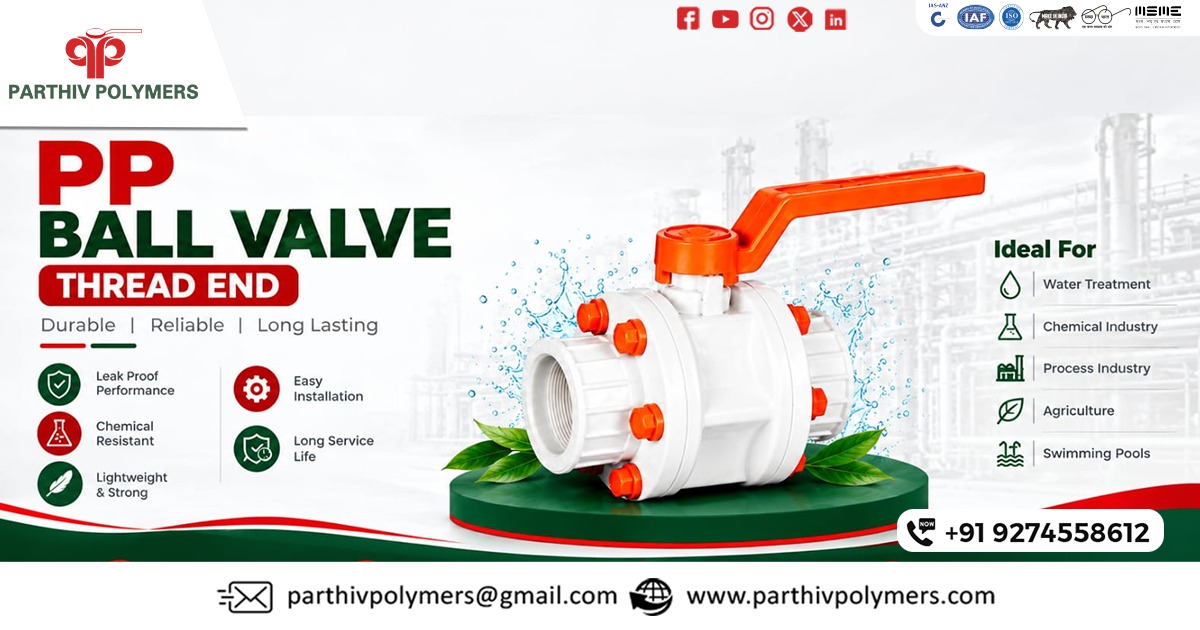
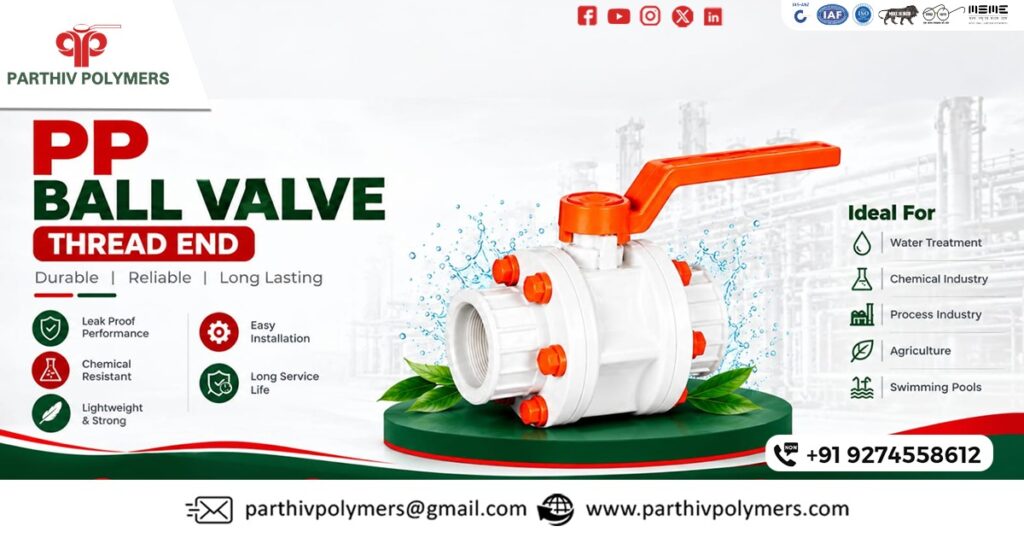
A PP ball valve with threaded ends is used to open or stop fluid flow in a compatible piping system. The ball inside the valve rotates to align or block the flow passage. Threaded connections allow the valve to join matching threaded pipework or fittings, provided the connection standards and materials are compatible.
Why Thread Compatibility Matters in Industrial Piping
A valve may appear to fit during initial assembly but still have an unsuitable thread profile or sealing arrangement. This can create leakage risks, installation difficulties, or unnecessary replacement work.
Before selecting a valve, confirm:
- Thread standard: Check whether the connection uses BSP, NPT, or another specified thread type. These standards should not be assumed interchangeable.
- Pipe material: Verify that the mating pipe or fitting is compatible with the valve connection.
- Sealing method: Confirm whether the joint requires an approved thread sealant, gasket, or another sealing arrangement.
- Installation access: Ensure there is enough room to tighten the connection and operate the valve handle.
These checks are particularly useful when replacing an existing valve or connecting equipment from different suppliers.
How a Thread-End PP Ball Valve Controls Flow
The valve uses a rotating ball with a passage through its centre. In a typical quarter-turn design, the handle rotates the ball between open and closed positions.
- Open position: The ball passage aligns with the pipeline, allowing fluid to flow.
- Closed position: The ball rotates across the flow path and blocks it.
- Operating control: The handle provides manual operation on designs equipped with a manual handle.
A PP ball valve with threaded ends is generally considered for applications where a compact connection and straightforward manual isolation are required. Its suitability depends on the fluid, pressure, temperature, valve construction, and actual operating conditions.
Check Chemical Compatibility Before Ordering
Polypropylene (PP) is used in many industrial piping applications, including certain chemical-handling and water-treatment systems. However, the fact that a valve is made from PP does not mean it is suitable for every chemical.
The complete valve assembly must be evaluated, including its body, ball, seals, and other wetted components.
| Selection factor | What the buyer should verify |
| Fluid composition | Chemical name, concentration, and any mixture components |
| Temperature | Normal operating temperature and possible temperature variations |
| Pressure | Working pressure and potential pressure surges |
| Wetted materials | Compatibility of the valve body, seals, and internal parts |
| Operating frequency | How often the valve will be opened and closed |
| Process requirements | Whether isolation, throttling, or another form of control is needed |
Important: Do not assume that a valve suitable for water will also be suitable for an acid, alkali, solvent, or hot process fluid. Confirm the specific application with the manufacturer before purchase.
Common Procurement Mistakes That Can Be Avoided
A low purchase price does not necessarily mean a valve is the right choice for a plant. Several small oversights can affect installation and long-term operating costs.
- Ordering by nominal size alone: Confirm the actual connection size, thread standard, and mating pipe dimensions.
- Ignoring seal materials: The body may be compatible with a fluid while its seals are not.
- Overlooking pressure and temperature limits: Obtain the manufacturer’s applicable ratings for the intended service conditions.
- Assuming all PP valves are identical: Construction, internal components, connection details, and available sizes can vary by model.
- Using excessive tightening force: Follow the manufacturer’s installation instructions to avoid damaging plastic threads.
- Skipping inspection: Check the valve and connections for visible damage, and carry out an appropriate leak test before commissioning.
These checks help buyers compare products on technical suitability rather than price alone.
Where Thread-End PP Ball Valves May Fit
Thread-end PP ball valves may be considered for compatible fluid lines in several industrial environments. Parthiv Polymers identifies chemical industries and pollution control, bulk drugs and pharmaceuticals, textile industries, fertilizer plants, food processing units, and effluent and sewage treatment plants among its application sectors.
The suitability of a particular valve still needs to be assessed against the process requirements.
Potential application areas include:
- Water distribution and utility lines.
- Compatible chemical transfer systems.
- Selected treatment and dosing lines.
- Industrial equipment requiring manual fluid isolation.
- Maintenance sections where a threaded connection suits the existing piping arrangement.
For food, pharmaceutical, or regulated processes, buyers should separately verify applicable material, hygiene, and documentation requirements.
A Practical Checklist for Comparing Suppliers
When evaluating a PP Ball Valve Thread End Manufacturer and Supplier In India, request enough information to compare products on a consistent basis.
- Product identification: Ask for the exact model and a current product datasheet.
- Connection details: Confirm thread type, nominal size, and sealing requirements.
- Operating limits: Obtain the applicable pressure and temperature ratings.
- Material details: Check the PP grade, seal material, and compatibility with the process fluid.
- Quality checks: Ask what inspections or pressure tests are performed and what documentation is available.
- Order planning: Confirm quantity, quoted price, dispatch schedule, packaging, and applicable commercial terms.
- Replacement requirements: If the valve is replacing an existing unit, provide photographs, measurements, and connection details to help verify fit.
A written specification helps prevent misunderstandings between the procurement team, plant engineer, and supplier.
Gujarat Sourcing Considerations for Industrial Valve Buyers
For projects in Gujarat, sourcing discussions can be easier when the buyer shares the piping layout, required valve quantity, process fluid, and project schedule at the quotation stage. Buyers should also consider transport arrangements, inspection requirements, and whether replacement products can be matched to existing connections.
Ahmedabad is a relevant sourcing base for industrial plastic valves and piping components. Parthiv Polymers lists its address in the Kubadthal area along the Odhav–Indore Highway, Ahmedabad, Gujarat.
Relevant Gujarat cities and industrial locations for sourcing research include Ahmedabad, Gandhinagar, Sanand, Changodar, Bavla, Kheda, Nadiad, Anand, Vadodara, Halol, Bharuch, Ankleshwar, Dahej, Surat, Hazira, Vapi, Valsad, Morbi, Rajkot, Jamnagar, Bhavnagar, Mehsana, Kalol, Palanpur, and Kutch.
These are regional industrial and business locations, not a confirmed list of Parthiv Polymers’ delivery or service coverage.
Four Service and Support Points to Discuss Before Purchase
To make a purchase enquiry more productive, buyers can discuss these four areas with Parthiv Polymers:
- Product selection: Share the intended application and required valve size to identify a potentially suitable product.
- Technical confirmation: Clarify thread standards, material compatibility, and operating limits before placing an order.
- Order coordination: Confirm the required quantity, quotation details, documentation, and expected dispatch schedule.
- Installation information: Request applicable handling, installation, and maintenance instructions for the selected valve.
These are recommended enquiry topics; the availability of each specific support service should be confirmed directly with the company.
Parthiv Polymers: Discussing Your Thread-End Valve Requirements
Parthiv Polymers manufactures and supplies plastic valves, pipes, and fittings under the Parthiv brand. Its published product range includes a PP Ball Valve Thread End, alongside other plastic valve types and piping components. The company identifies Ahmedabad, Gujarat, India, as its manufacturing location.
For buyers evaluating a PP Ball Valve Thread End Manufacturer and Supplier In India, the next step is to match the product to the actual pipeline conditions instead of relying on the product name alone.
Visit the official website: parthivpolymers.com
Before requesting a quotation, prepare the fluid details, operating pressure, temperature, pipe size, thread standard, and required quantity. This information can help the supplier assess the enquiry more accurately.
Frequently Asked Questions
1. How do I select the correct threaded PP ball valve size?
Match the valve’s nominal size and thread specification with the mating pipe or fitting. Confirm the thread standard, sealing method, and operating requirements before ordering.
2. Can a PP ball valve be used for chemical handling?
It may be suitable for certain chemicals, depending on concentration, temperature, pressure, and the materials used in the complete valve assembly. Obtain manufacturer confirmation for the specific fluid.
3. What information is needed to request a quotation?
Provide the required quantity, valve size, thread type, process fluid, operating pressure, temperature, and intended application. Also mention any project documentation or delivery requirements.
4. What should I check before installing a threaded PP ball valve?
Inspect the valve and mating threads for damage, confirm compatibility, and follow the manufacturer’s tightening and sealing instructions. Conduct an appropriate leak test before putting the pipeline into service.
Conclusion
Selecting a threaded PP ball valve requires more than matching the connection size. Buyers should verify chemical compatibility, thread standards, pressure and temperature limits, sealing arrangements, and supplier documentation. Careful checks before ordering can reduce fitment issues and help ensure the selected valve suits the intended industrial application.
Looking for a suitable threaded PP ball valve? Contact Parthiv Polymers through its official website to discuss your application and product requirements.
Website: www.parthivpolymers.com
Phone No:+91 9274558612
Email Id: parthivpolymers@gmail.com
View Product: Click Here