Industrial buyers in West Bengal need flange-end ball valves that match pipeline material, fluid properties, pressure requirements, and installation conditions. Parthiv Polymers supports product selection with manufacturing support from Ahmedabad, Gujarat, India, helping buyers assess their requirements before ordering.
Selecting the Right Polymer Valve for Your Pipeline
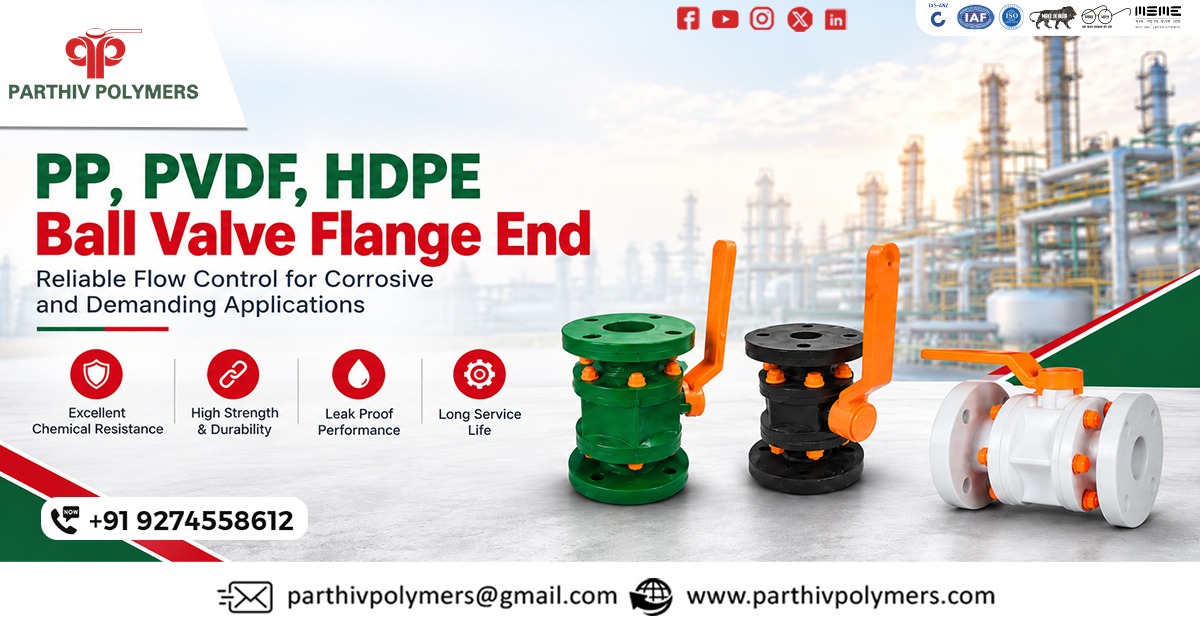
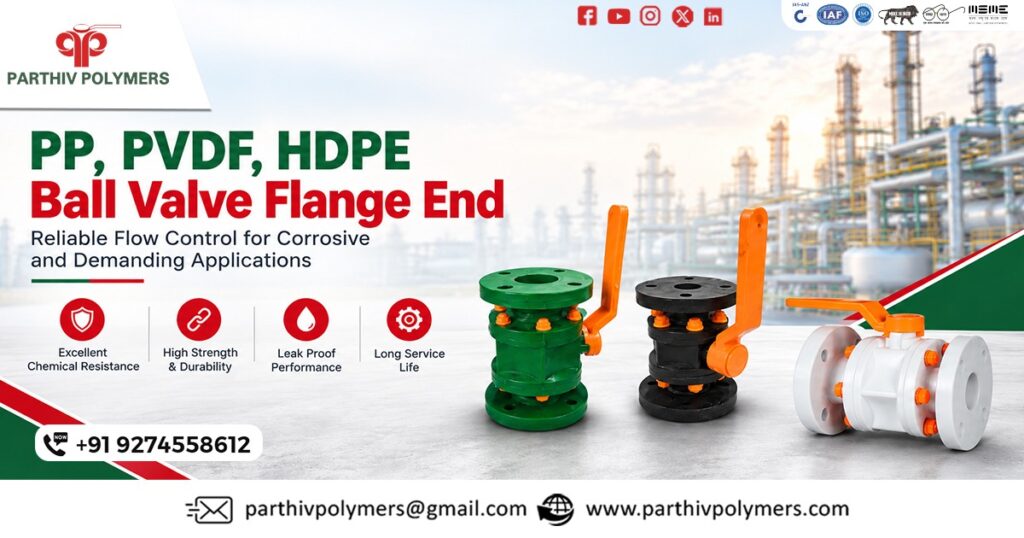
A flange-end ball valve controls fluid flow through a rotating ball inside the valve body. The flange connection allows the valve to be connected to compatible pipeline flanges, making it important to check the connection dimensions before purchase.
For buyers searching for a PP, PVDF, HDPE Ball Valve Flange End Supplier In West Bengal, the first step is to identify the fluid, operating temperature, pressure, and piping material. These details help narrow down a suitable valve configuration.
PP, PVDF, and HDPE: Which Material Fits Your Requirement?
Each polymer has different properties, so the material should be selected according to the application rather than price alone.
- PP (Polypropylene): Often considered for compatible chemical handling, water systems, and industrial process lines.
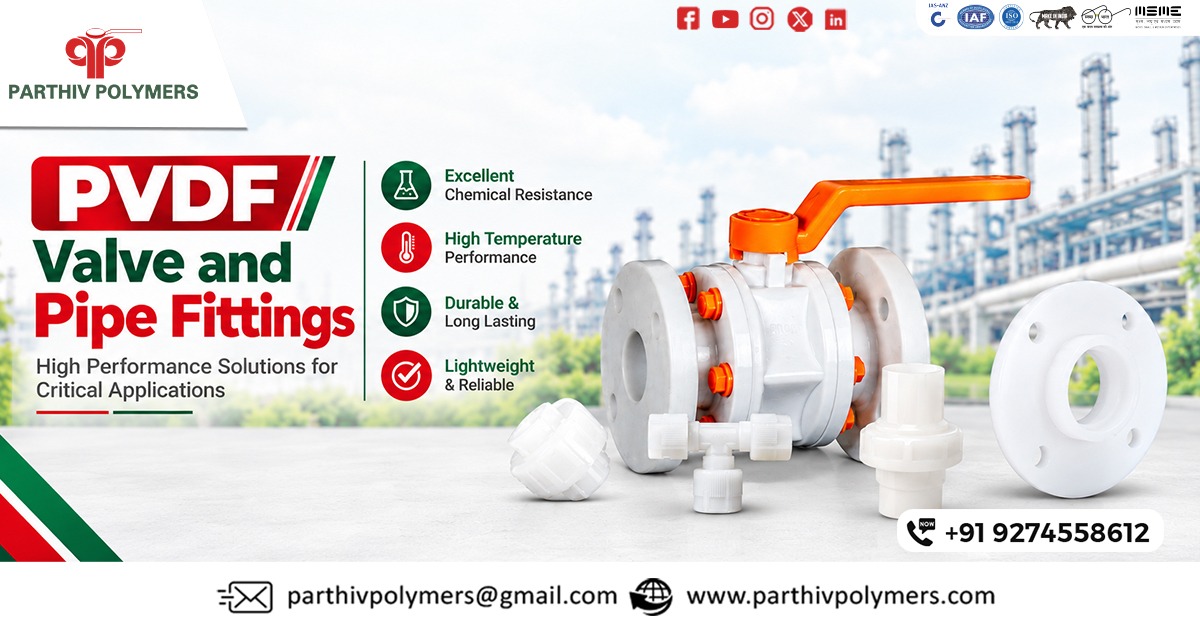
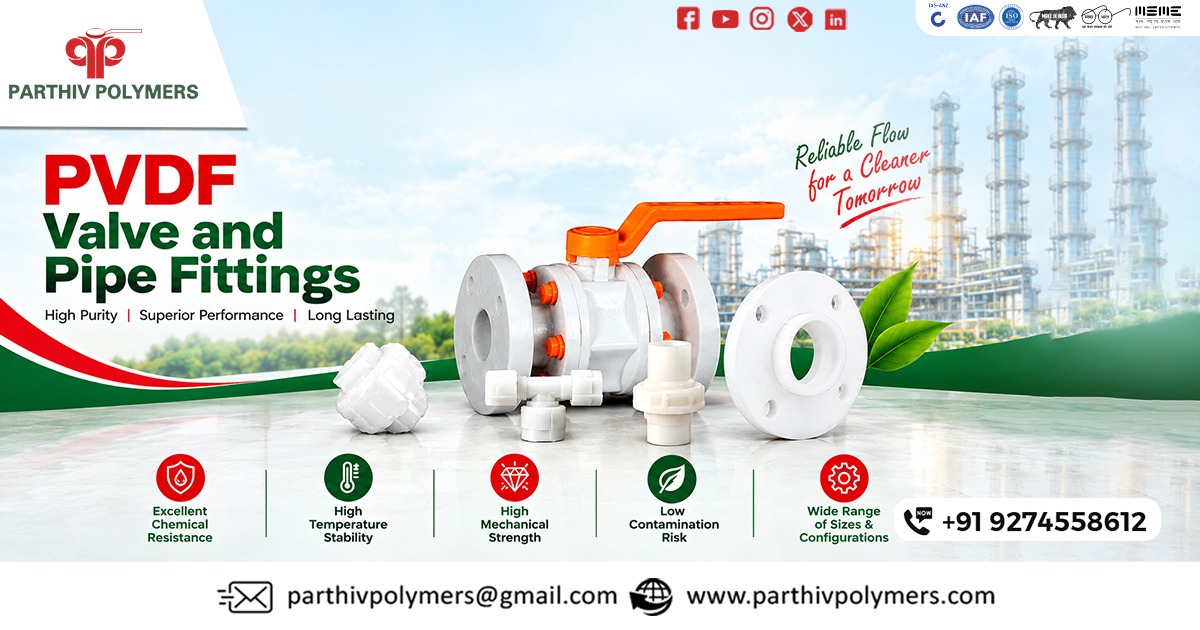
- PVDF (Polyvinylidene Fluoride): Considered for applications requiring chemical resistance and performance under more demanding temperature conditions, subject to the specific grade and operating limits.
- HDPE (High-Density Polyethylene): Commonly used in compatible water-handling and industrial piping systems where polyethylene pipe connections are suitable.
Always confirm chemical compatibility, temperature limits, pressure ratings, and the manufacturer’s technical data for the exact valve model.
Pipeline Details Buyers Should Confirm Before Ordering
Before contacting a supplier, prepare the following information:
- Fluid details: Identify the liquid or chemical, including its concentration where applicable.
- Operating conditions: Confirm normal and maximum pressure and temperature.
- Valve size: Match the required flow path and pipeline dimensions.
- Flange connection: Verify the flange standard, drilling pattern, facing, and mating dimensions.
- Operating method: Establish whether manual operation is sufficient or automation is required.
These checks help reduce the risk of ordering a valve that cannot be fitted or used under the intended conditions.
Installation Planning for Flange-End Ball Valves
Correct installation helps the valve operate as intended and reduces the risk of connection problems.
- Check that the pipeline flange dimensions match the valve.
- Align the mating flanges before tightening the fasteners.
- Use compatible gaskets and suitable fasteners for the service conditions.
- Avoid forcing misaligned pipes against the valve body.
- Check the valve’s flow-control operation and inspect the joint for leakage during commissioning, following the manufacturer’s instructions.
Provide sufficient clearance for operating the handle, inspecting the connection, and removing the valve when maintenance is needed.
Material Compatibility and Routine Valve Maintenance
A polymer valve must be suitable for the fluid passing through it. Chemical concentration, temperature changes, pressure fluctuations, and the condition of the pipeline can affect its suitability.
Routine maintenance should include checking for leakage around flange joints, inspecting the valve body for visible damage, and confirming that the operating mechanism moves as intended. If operation becomes stiff or leakage develops, isolate the system safely and follow the manufacturer’s maintenance procedure. Do not dismantle a pressurised valve.
A Purchase Checklist for Industrial Buyers
When evaluating a PP, PVDF, HDPE Ball Valve Flange End Supplier In West Bengal, ask for the technical information needed to verify suitability.
- Valve material and model-specific technical data.
- Nominal size, flange dimensions, and connection compatibility.
- Permitted pressure and temperature ranges.
- Chemical compatibility for the intended fluid.
- Inspection or testing documentation available for the supplied model.
- Availability of compatible replacement parts and technical support.
- Expected dispatch schedule and any project-specific requirements.
A clear specification sheet makes it easier for procurement teams, engineers, and suppliers to evaluate the same requirements before an order is confirmed.
Services
- Polymer ball valve selection based on fluid properties and pipeline conditions.
- Flange-end connection and dimensional requirement review.
- Product configuration guidance for PP, PVDF, and HDPE valve requirements.
- Technical coordination for documentation, installation considerations, and replacement planning.
Location
West Bengal has industrial and commercial centres where suitable pipeline valves may be required for manufacturing, water handling, chemical processing, and infrastructure projects. Relevant locations include Kolkata, Howrah, Durgapur, Asansol, Haldia, Siliguri, Kharagpur, Kalyani, Bidhannagar, Dankuni, Barasat, Barrackpore, Raniganj, Burnpur, Purulia, Bankura, Bardhaman, Malda, Jalpaiguri, Cooch Behar, Tamluk, Uluberia, Falta, Rishra, and Serampore.
Planning Your Valve Requirement With Parthiv Polymers
Parthiv Polymers provides a point of contact for buyers evaluating polymer valve requirements for industrial projects. Visit parthivpolymers.com to discuss the product information relevant to your application.
Manufacturing support from Ahmedabad, Gujarat, India, can help coordinate requirement discussions and product selection. Before finalising an order, share the pipeline size, fluid details, operating conditions, and flange dimensions so the proposed valve can be evaluated against the project’s needs.
Frequently Asked Questions
Q1: How do I select between PP, PVDF, and HDPE ball valves?
A: Compare the fluid’s chemical compatibility, operating temperature, pressure, and pipeline material. Confirm the selected valve’s limits using the manufacturer’s technical documentation.
Q2: What should I check when buying a flange-end ball valve?
A: Verify the valve size, flange drilling pattern, facing, gasket compatibility, pressure rating, and installation space. Matching flange dimensions is essential for a suitable connection.
Q3: Can these polymer ball valves handle industrial chemicals?
A: Some models may be suitable for specific chemicals, depending on the valve material, grade, concentration, and operating conditions. Confirm compatibility before placing an order.
Q4: How can I evaluate a PP, PVDF, HDPE Ball Valve Flange End Supplier In West Bengal?
A: Request technical data, connection details, material information, available test documents, and after-sales support details. Evaluate the supplier’s ability to address your actual pipeline requirements.
Conclusion
Selecting a suitable flange-end ball valve requires more than matching the nominal pipe size. Material compatibility, operating limits, flange dimensions, and maintenance access all influence the decision. Buyers in West Bengal can discuss these requirements with Parthiv Polymers and confirm product suitability before proceeding with procurement.
Contact Parthiv Polymers through parthivpolymers.com to discuss your polymer ball valve requirements and identify the technical details needed for product selection.
Website: www.parthivpolymers.com
Phone No:+91 9274558612
Email Id: parthivpolymers@gmail.com
View Product: Click Here