Industrial piping projects in Tamil Nadu require compatible pipe sizes, pressure classes, and fittings for reliable fluid movement. Parthiv Polymers supports buyers seeking a PPR-C Pipes Fittings Supplier In Tamil Nadu, with manufacturing support from Ahmedabad, Gujarat, India.
Start With the Piping Requirement, Not Just the Product List
PPR-C piping systems are selected for applications involving hot or cold water and certain industrial fluid-handling requirements. The pipe and fitting combination needs to match the actual operating conditions.
Before requesting a quotation, identify:
- Fluid being transported
- Operating temperature
- Working pressure
- Required pipe diameter
- Total pipeline length
- Number and type of fittings
- Connection method
- Installation environment
- Expected future expansion
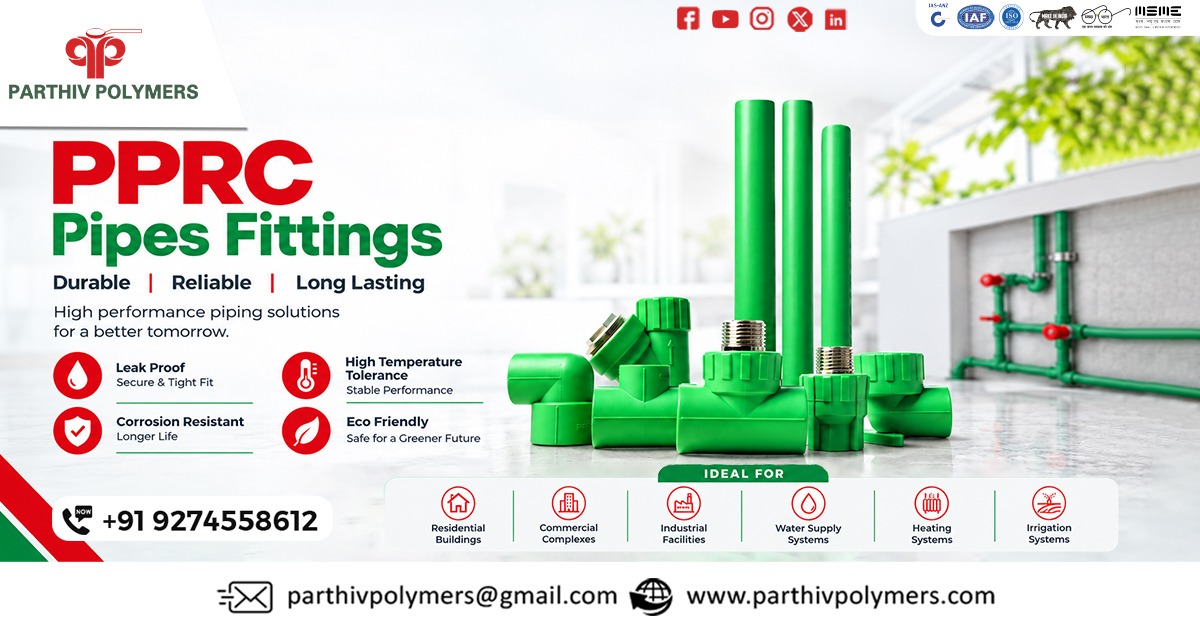
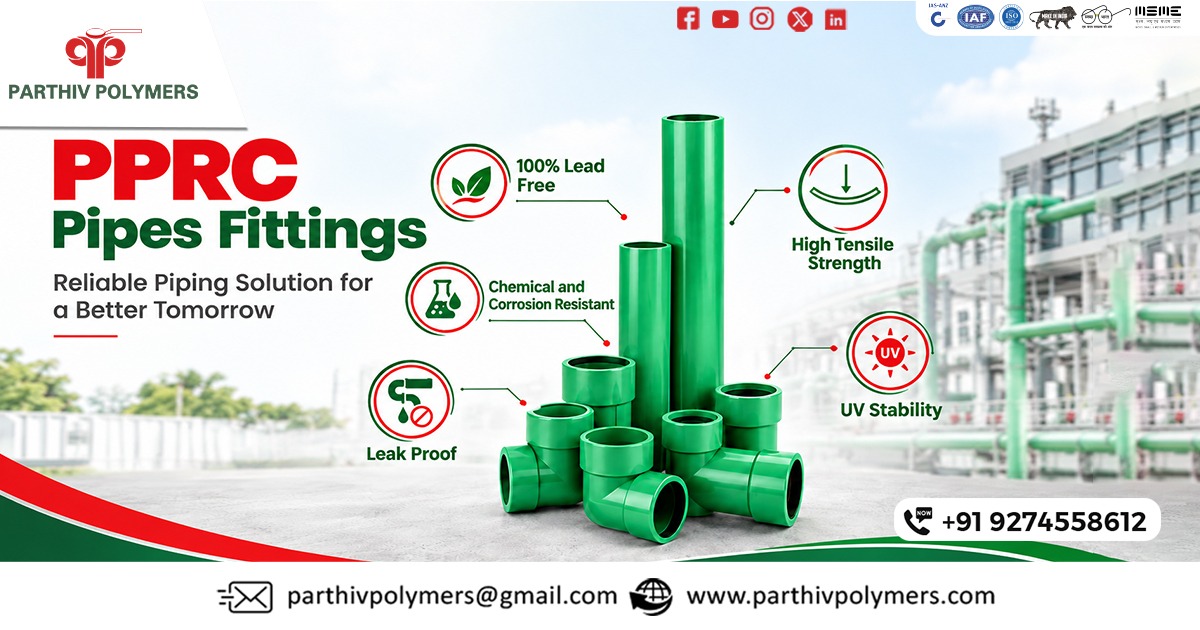
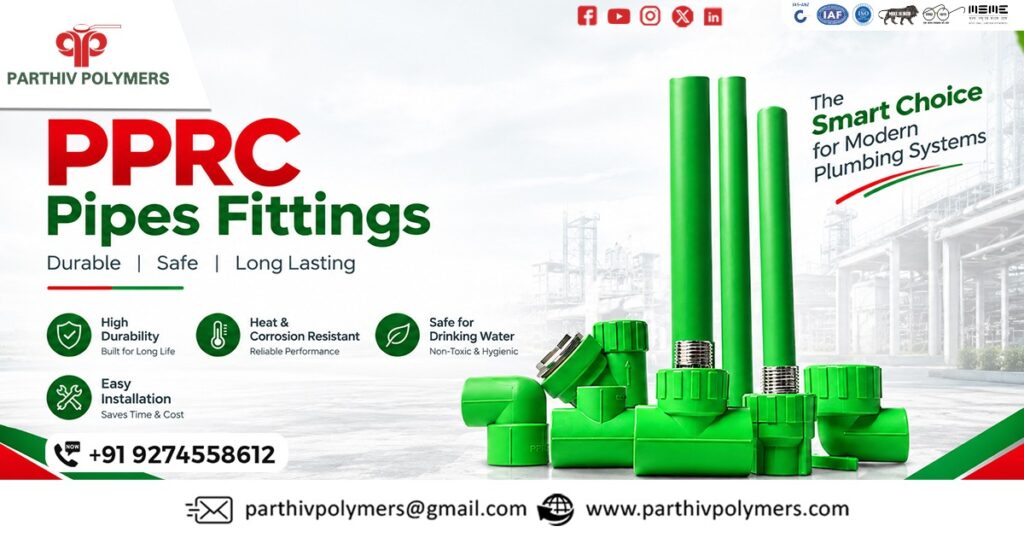
Parthiv Polymers lists PPRC pipes from 20 mm to 315 mm, with PN10, PN16, and PN20 pressure classes. Its fitting range includes bends, tees, reducers, couplers, flanges, unions, valves, and threaded fittings.
Matching Pipe Pressure With Actual Service Conditions
A common purchasing mistake is selecting pipe size without considering pressure and temperature together.
For project evaluation, buyers should verify:
| Checkpoint | What to Confirm |
| Diameter | Required internal flow and connection size |
| Pressure | Operating and expected peak pressure |
| Temperature | Normal and maximum service temperature |
| Fittings | Compatible bends, tees, reducers and couplers |
| Connection | Socket-fusion or other specified joining method |
| Layout | Straight runs, branches and access points |
The pressure class should be selected according to the application rather than simply choosing the highest available rating.
Why Fitting Compatibility Matters During Installation
A piping network can contain many connection points, and incorrect component matching can create installation difficulties.
For a commercial or industrial order, prepare the fitting schedule in advance:
- List all pipe diameters.
- Mark every directional change.
- Identify branch connections.
- Add reducers where pipe sizes change.
- Specify flanges for detachable equipment connections.
- Identify threaded connections where required.
- Keep suitable replacement components in the project plan.
Parthiv Polymers lists socket fusion as the connection method for its PPRC pipes.
Practical Installation Planning for Tamil Nadu Projects
Before installation begins, the site team should check whether the piping route is ready.
Consider:
- Adequate working space around joints
- Proper pipe alignment
- Accessible connection points
- Suitable supports and routing
- Protection from unnecessary physical damage
- Correct equipment and tools for joining
- Clear access for future inspection
During socket-fusion installation, pipe preparation, heating, alignment, insertion, and cooling should follow the applicable product and joining-equipment instructions. Actual heating parameters should not be assumed without checking the relevant manufacturer’s guidance.
Keeping PPR-C Piping Reliable After Installation
Maintenance requirements depend on the system design and operating conditions, but routine inspection can help identify issues before they affect plant operation.
A basic maintenance approach includes:
- Inspecting accessible joints and connections
- Checking for visible damage
- Reviewing pipe supports and alignment
- Looking for unusual leakage or flow restriction
- Checking valves and threaded components
- Keeping replacement fittings available for critical lines
- Following the supplier’s maintenance recommendations
Piping that carries process fluids should also be inspected according to the plant’s own safety and maintenance procedures.
Troubleshooting Common Piping Issues
| Common Issue | Possible Cause | Practical Check |
| Leakage at a joint | Poor joining or component damage | Inspect the joint and installation method |
| Reduced flow | Restriction or unsuitable layout | Review the route, diameter and fittings |
| Misaligned connection | Incorrect positioning during installation | Check pipe and fitting alignment |
| Damaged fitting | Handling or installation issue | Inspect before putting the section into service |
| Difficult equipment connection | Incorrect fitting configuration | Verify flange, thread or adapter requirements |
What Buyers Should Verify Before Placing the Order
When comparing a PPR-C Pipes Fittings Supplier In Tamil Nadu, the lowest quotation should not be the only consideration. The complete supply requirement should be clear.
Ask the supplier to confirm:
- Pipe sizes and pressure classes
- Fitting types and quantities
- Material specification
- Available product configurations
- Connection method
- Product dimensions
- Packaging requirements
- Technical documentation
- Installation assistance, if required
- Replacement and spare-part availability
- Delivery planning for the project location
This approach reduces the risk of receiving an incomplete fitting combination or components that do not match the planned piping layout.
Services
- Requirement analysis and PPR-C product selection
- Pipe and fitting configuration planning
- Project supply and installation coordination
- Technical and after-sales assistance
Location
For projects requiring a PPR-C Pipes Fittings Supplier In Tamil Nadu, supply planning can support industrial and commercial requirements across Chennai, Coimbatore, Madurai, Tiruchirappalli, Salem, Tiruppur, Erode, Hosur, Vellore, Thoothukudi, Tirunelveli, Dindigul, Thanjavur, Sivakasi, Karur, Namakkal, Cuddalore, Kanchipuram, Sriperumbudur, Ranipet, Krishnagiri, and Perambalur.
Product Selection and Technical Support From Parthiv Polymers
Parthiv Polymers manufactures and supplies PPRC pipes and fittings from its Ahmedabad, Gujarat base. Its published product range includes multiple pipe sizes, pressure classes, fitting configurations, and threaded options.
For customers looking for a PPR-C Pipes Fittings Supplier In Tamil Nadu, the requirement can be discussed according to application, pipe diameter, pressure, temperature, fitting schedule, quantity, and project layout. Product information is available through Parthiv Polymers, with manufacturing support from Ahmedabad, Gujarat, India.
FAQs
Q: How should I select the correct PPR-C pipe size?
A: Start with the required flow, pipe route, operating conditions, and connection sizes. The selected diameter should also match the fittings and connected equipment.
Q: Which pressure class should be selected for a PPR-C piping system?
A: The pressure class should correspond to the actual operating conditions of the line. Parthiv Polymers lists PN10, PN16, and PN20 options for its PPRC pipes.
Q: What information should I provide when requesting a quotation?
A: Provide pipe sizes, quantities, pressure and temperature conditions, fitting requirements, connection method, application, delivery location, and any specific project requirements.
Q: Can PPR-C fittings be supplied for different piping configurations?
A: Yes, the listed range includes bends, tees, reducers, couplers, flanges, unions, valves, and brass-threaded fittings in different configurations and sizes.
Conclusion
A suitable PPR-C piping system depends on correct sizing, pressure selection, fitting compatibility, installation planning, and ongoing inspection. For Tamil Nadu projects, buyers can discuss their requirements with Parthiv Polymers and coordinate supply through manufacturing support from Ahmedabad, Gujarat, India.
Contact Parthiv Polymers to discuss your PPR-C pipe and fitting requirement, project quantity, configuration, and technical needs.
Website: www.parthivpolymers.com
Phone No:+91 9274558612
Email Id: parthivpolymers@gmail.com
View Product: Click Here